
Agnik Bhattacharya
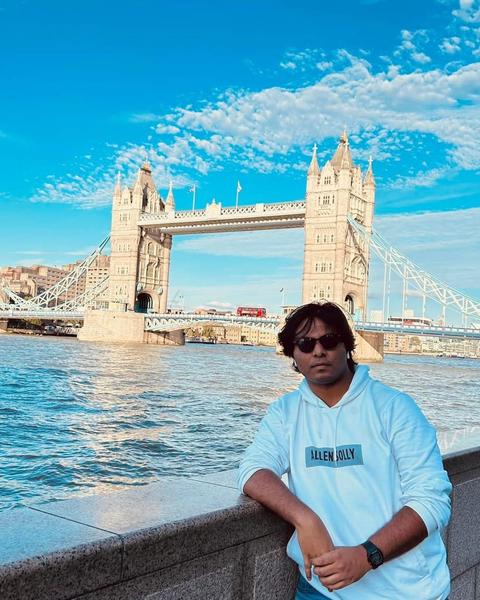
Agnik Bhattacharya (BA in Ancient Indian and World History, Culture, and Archaeology, Sanskrit College, University of Calcutta; MA in History, Presidency University, Kolkata) is currently pursuing his PhD in Visual Studies at the University of California, Irvine, as the inaugural Elahé Omidyar Mir-Djalali Doctoral Fellow in Art History and Archaeology of Ancient Iran.
Agnik’s doctoral dissertation, Political Narratives and Archaeological Investigations: A Global History of Afghan Archaeology in Modern Afghanistan, 1833–1979, explores the archaeological, social, and political histories of the pre-Islamic eastern Iranian world and Central Asia. His research focuses on the role these histories play in the nation-building processes of modern Central Asian republics, particularly Afghanistan. He also examines the significance of Gandhara art and Buddhist visual culture during the late 19th and early 20th centuries, analyzing how pre-modern cultural motifs have been used in the scholarly and sociopolitical paradigms of post-colonial South and Central Asia.
Agnik has been recognized with numerous prestigious fellowships, including the John F. Richards Afghanistan Fellowship, awarded twice by the American Institute of Afghanistan Studies at Boston University. He has held summer research fellowships at the Ancient India and Iran Trust in Cambridge and the School of History at the University of St. Andrews in Scotland, UK.
In addition to his research, Agnik has co-organized significant academic events. In 2022, he co-led the international symposium Interpreting Afghanistan at the UCI Jordan Center for Persian Studies. More recently, he co-organized his second symposium, Manifesting Heritage: Museums, Memorializations & Archaeology in Modern South Asia, held at the 52nd Annual Conference on South Asia in Madison, Wisconsin.
Agnik has presented his research at various renowned institutions, including the London School of Economics, the University of Edinburgh, the Institute for the Study of the Ancient World at New York University, the American Institute of Archaeology, and the Association for Asian Studies.